
Operational Rules to be Observed When Conducting Specified Flights (Revised December 5, 2022)
When conducting a specified flight, the operator of an unmanned aircraft must notify the Minister of Land, Infrastructure, Transport and Tourism in advance of a flight plan containing the following items:
・The unmanned aircraft's registration mark, type, and model
・Name of the person operating the UAV, along with ※1 skill certificate number and ※2 flight permit/approval number
・Purpose of flight, altitude, and speed
・Prohibited airspace to be flown in and method of flight
・Departure location, destination, and estimated time required to reach the destination
・Whether access control measures are in place and their details
・Whether insurance for damages is in place and its details
※1: Limited to persons who have obtained a skill certificate
※2: Only if permission/approval has been obtained
2. Carrying and Recording Flight Logs
Operators flying UAVs are required to carry a flight log when conducting specified flights. The flight log must promptly record the following items, in addition to UAV information (registration mark, type, model, manufacturer, serial number, etc.):
・Flight Records
Date/year of flight, takeoff/landing location, flight duration, name of operator, malfunctions and their resolution, etc.
・Daily Inspection Records
Date/year and location of daily inspection, name of inspector, results of daily inspection, etc.
・Inspection and Maintenance Records
Date/year and location of inspection/maintenance, name of inspector, details and reasons for inspection, repair, modification, or maintenance, etc.
【What Constitutes a Specified Flight】
・Airspace near airports
・Airspace at or above 150 meters (495 feet)
・Airspace over DID (Densely Inhabited District) areas
・Beyond Visual Line of Sight (BVLOS) flight
・Night flight
・Flight within 30 meters (100 feet) of third parties
・Flight over events
・Transportation of hazardous materials
・Dropping of objects
Drone (Unmanned Aerial Vehicle) Registration Begins (Revised June 20, 2022)
Additionally, even below this weight threshold, flying may violate the Act on the Prohibition of Flying Small Unmanned Aircraft in Certain Areas. Therefore, extreme caution is required when operating drones.
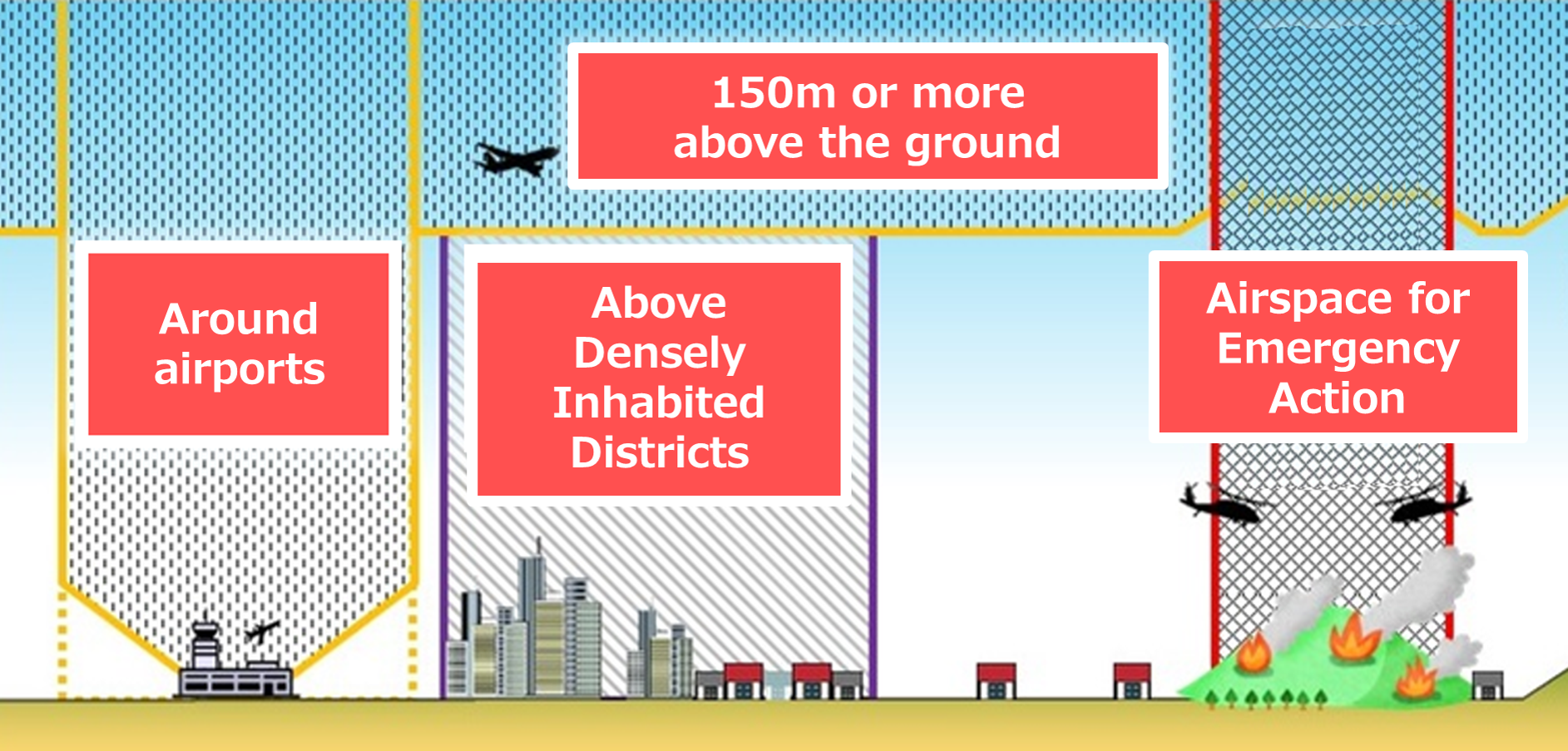
Airspace where flight is prohibited under the Aviation Act concerning unmanned aerial vehicle
・Airspace above designated densely populated areas (DID) based on the national census
*Details can be confirmed on maps provided by the Geospatial Information Authority of Japan
・Airspace at or above 150m above ground level or water surface
*Airspace within 30m of tall structures such as chimneys or transmission towers is excluded from the UAV no-fly zone, even if it is at or above 150m above ground level or water surface.
・Emergency service airspace
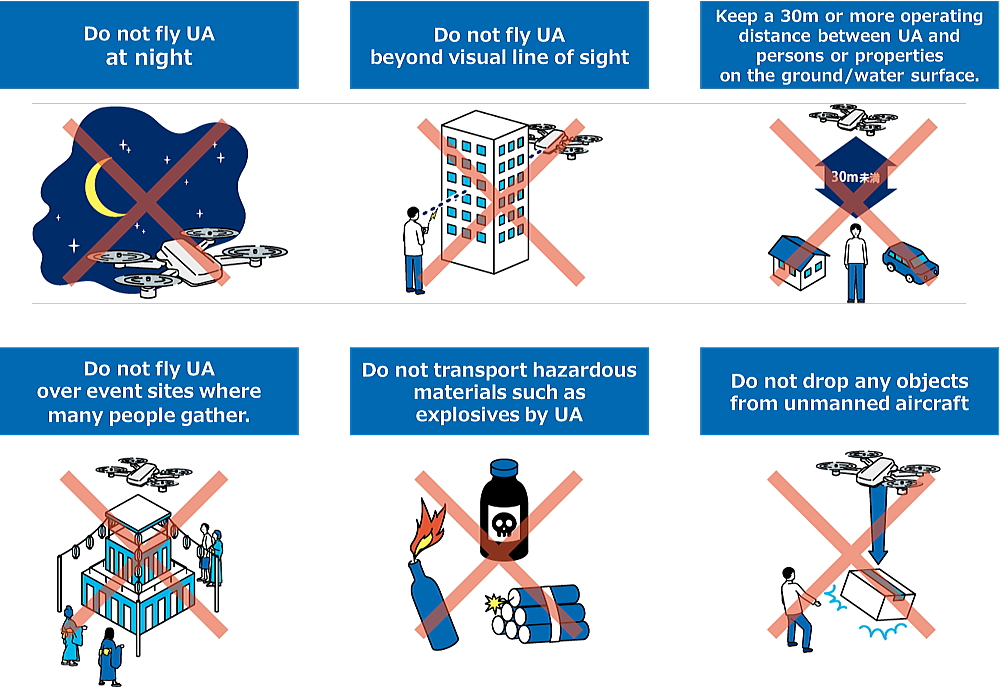
Methods of Flight Requiring Compliance
・Conduct pre-flight checks
・Fly in a manner that prevents collisions with aircraft or other unmanned aircraft
・Do not fly in a manner that causes nuisance to others
Methods of Flight Requiring Authorization
・Fly while maintaining constant visual line of sight (directly with the naked eye) over the UAV and its surroundings
・Fly maintaining a distance of at least 30 meters from people (third parties) or objects (third-party buildings, vehicles, etc.)
・Do not fly over events where large numbers of people gather, such as festivals or fairs
・Do not transport dangerous goods such as explosives
・Do not drop objects from the UAV
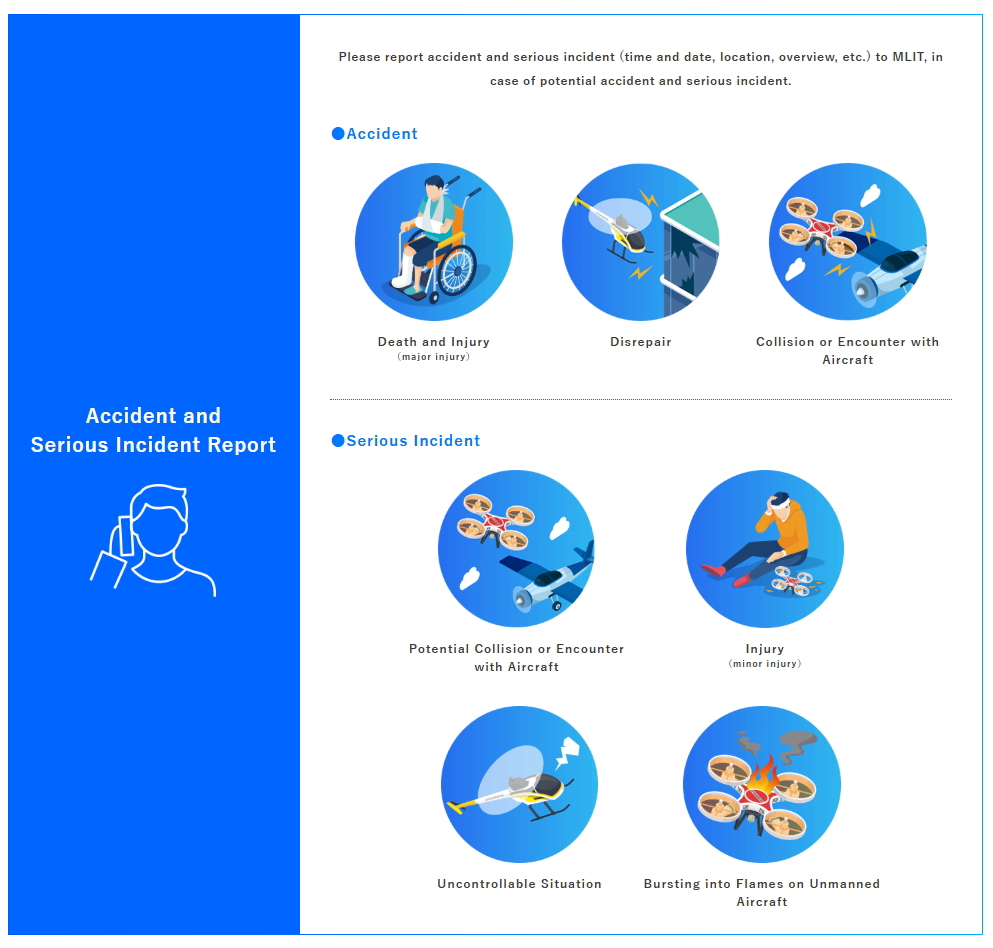
Reporting Obligation for Accidents and Serious Incidents
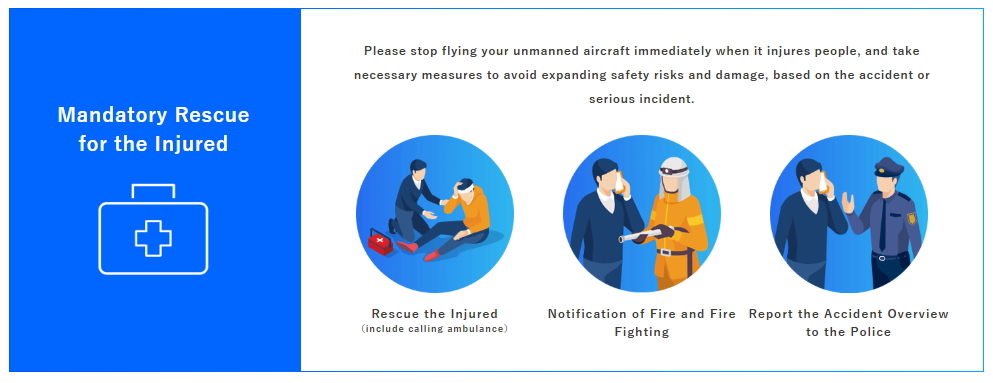
Duty to Provide First Aid When Injuries Occur
Drone Violations and Penalties (Revised December 5, 2022)
Imprisonment for up to two years or a fine not exceeding 1 million yen
・Violation of the amended Aviation Act
A fine not exceeding 500,000 yen
・Violation of the Act on the Prohibition of Flight of Small Unmanned Aircraft, etc.
Imprisonment for up to one year or a fine not exceeding 500,000 yen
・Violating the drone registration obligation
Imprisonment for up to one year or a fine not exceeding 500,000 yen
・Operating a drone while intoxicated
Imprisonment for up to one year or a fine not exceeding 300,000 yen
・Conducting specified flights without reporting the flight plan
A fine not exceeding 300,000 yen
・Failing to report an accident or making a false report when one occurs
A fine not exceeding 300,000 yen
・Flying a drone without carrying a skill certificate
A fine not exceeding 100,000 yen
・Flying a drone without keeping a flight log
A fine not exceeding 100,000 yen
・Failing to record in the flight log or making false entries
A fine not exceeding 100,000 yen
For some of the above items, permission or approval may be obtained for up to one year under the following provisions of the Aviation Act by applying to the MLIT.
【Permitted/Approved Items】
Article 132, Paragraph 1, Item 2: Flying over densely populated areas (C)
Article 132-2, Paragraph 1, Item 5: Flying during daylight hours (from sunrise to sunset)
Article 132-2, Paragraph 1, Item 6: Flying within visual line of sight (directly with the naked eye), constantly monitoring the UAV and its surroundings
Article 132-2, Paragraph 1, Item 7: Flying while maintaining a distance of at least 30m from persons (third parties) or objects (third-party buildings, vehicles, etc.)
Depending on the location (such as national forests or national parks), prior application or notification may be required. Please ensure thorough advance confirmation before flying.
When conducting specified flights, you must always submit a flight plan notification in advance via the Ministry of Land, Infrastructure, Transport and Tourism's DIPS 2.0 system.